
A new item coming to a Free-Range Historian blog near you – a series, Word Count! Each quarter, as I type up my latest column for Western Pennsylvania History magazine, I check the handy dandy word count tool in Microsoft Word…and swear just a little. I’m over my limit, again. I do what I can to rein in the narrative to under 800 words, again. I send my apologies to the editorial team, again. And I shed a metaphorical tear over what I had to cut from my story, again.
Rather than continue to mourn the loss of interesting details or rabbit trails from these Northwestern Pennsylvania stories, I’ll recap them for you here in Word Count. Check back periodically for all the things you didn’t know that you didn’t know about our region’s past!
This week, we’re looking at….
Julien Bryan
Born and raised in Titusville, Crawford County, photographer and filmmaker Julien Bryan made history when the outbreak of World War II found him stranded in Warsaw with a camera or two, and the collection of photographs and documentary Siege that followed.
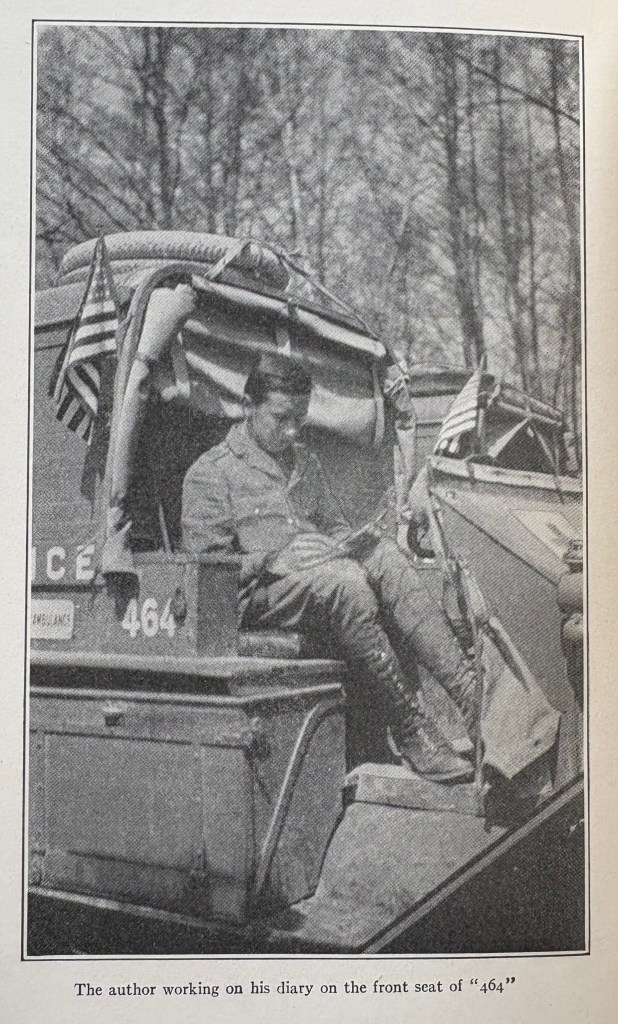
Bryan was no stranger to war. In 1916 after graduating from Titusville High School, Bryan enlisted for a six-month stint in the American Ambulance Service during World War I. From January to July of 1917, he and his Ford ambulance traversed the heavily shelled roads of France, bringing the wounded from the front lines to field hospitals. Bryan had the foresight to keep a journal, which he expanded during his freshman year at Princeton into a full-length book, Ambulance 464. This is no Hemingway tome where everyone dies in the rain. Bryan’s enthusiasm for life, his pastoral heart for his fellow servicemen, and his love of adventure are clear from beginning to end. And I had to chuckle when Bryan finds himself with an egg but no fat to fry it with – until he remembers the Vaseline in his kit. “Two minutes later I was munching the result, a crisp, savory egg; the slight oil-refinery flavor made me homesick for Pennsylvania.”
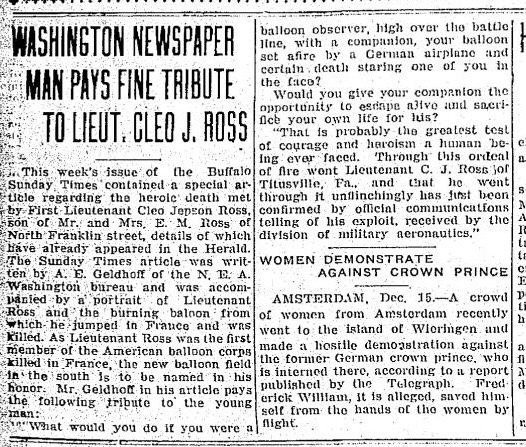
One section of Ambulance 464 was particularly poignant. In April near Dombasle, Bryan witnessed a balloon pilot killed when he was attacked by a German aircraft. Though the balloon’s ground crew tried to reel in the craft before it was too late, the winding mechanism simply wasn’t as fast as the plane’s machine gun. Just over a year later, another Titusville High School grad found himself in the same position. Lt. Cleo J. Ross, THS class of 1914, was piloting a balloon near Brabant, France, in the 8th Balloon Division of the American Expeditionary Force when an enemy airplane approached. The balloon divisions did important work directing artillery fire for troops on the ground, but were inviting targets. From Ross’s Distinguished Service Cross citation: “One of the planes dived from a cloud and fired at the balloon, setting fire to it, and although he could have jumped from the basket at once he refused to leave until his companion, a student observer, had jumped. Lieutenant Ross then leaped, but it was too late, for the burning balloon dropped on his parachute. He was dashed to the ground from a height of 300 meters and killed instantly.” Ross and Bryan were only two years apart in high school and were both active in student government at the same time. How well did they know each other? Did Ross read Bryan’s letters home, documenting his experience? Did Bryan mourn his classmate’s loss? As often happens, historical research leads to more questions than answers.
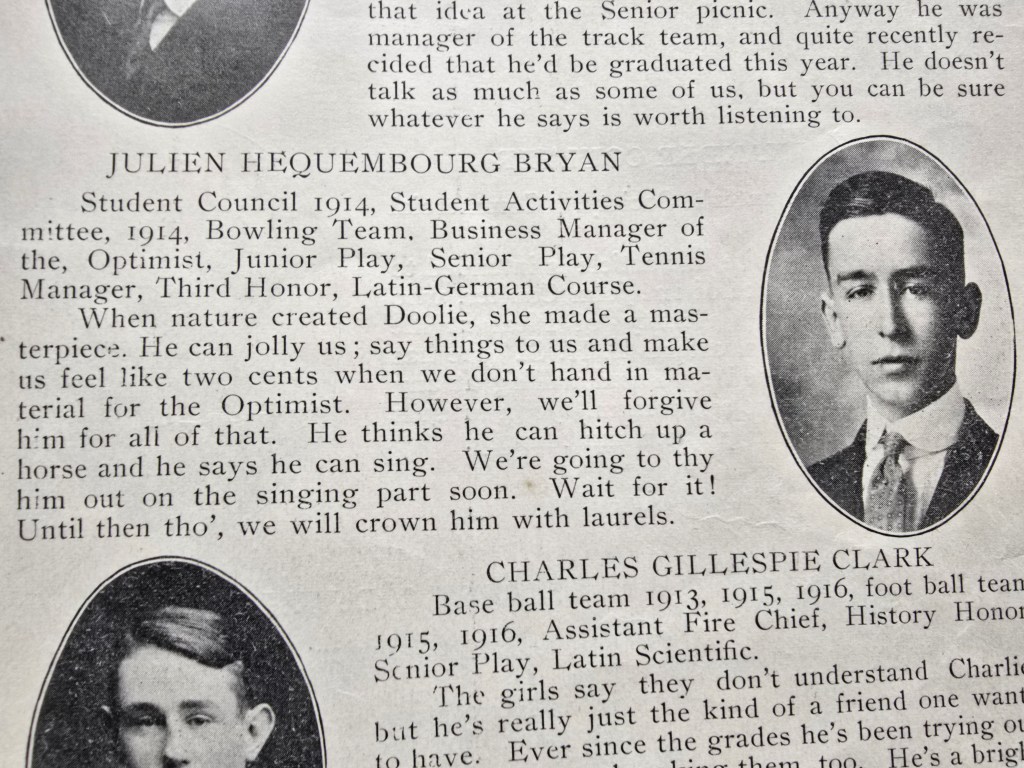
Read more about Julien Bryan and his contribution to filmmaking, photography, and cultural understanding in the Fall 2025 issue of Western Pennsylvania History, a quarterly publication by the Senator John Heinz History Center. Bryan will also be honored by the Titusville Alumni Association this summer when he is inducted into the Titusville High School Hall of Fame.

 The Free-Range Historian