
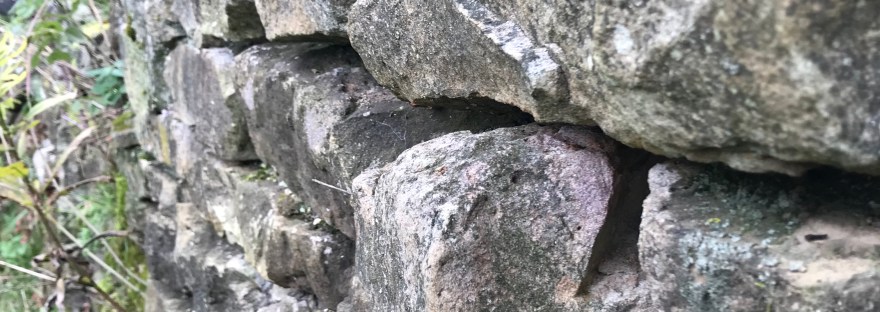
A few yards west of a winding dirt road in a rural township, past the point where the snowplows bother to service in the winter, is a world cut off from the sight of the casual passer-by. It can barely be glimpsed through the maples and oaks that now line the roadway, a distant clearing quickly becoming re-forested. The more adventurous traveler can find it, but had better mind his or her step—the brambles and scrub easily hide their treasure.
And really, it’s not much to look at these days. Just the crumbling, dry-stone foundation of an early 20th-century barn, left behind when its builders moved down the road to the sheltered valley where their second homestead still stands. Despite its decrepit appearance, however, the old barn foundations and their associated sub-structures give me a thrill. Real people lived and worked here, shaped the landscape, and were in turn shaped by the land themselves. Seeing the foundation is like watching an archaeological site take shape, knowing that each year the landscape is reclaiming these stones until they will finally be hidden from view.
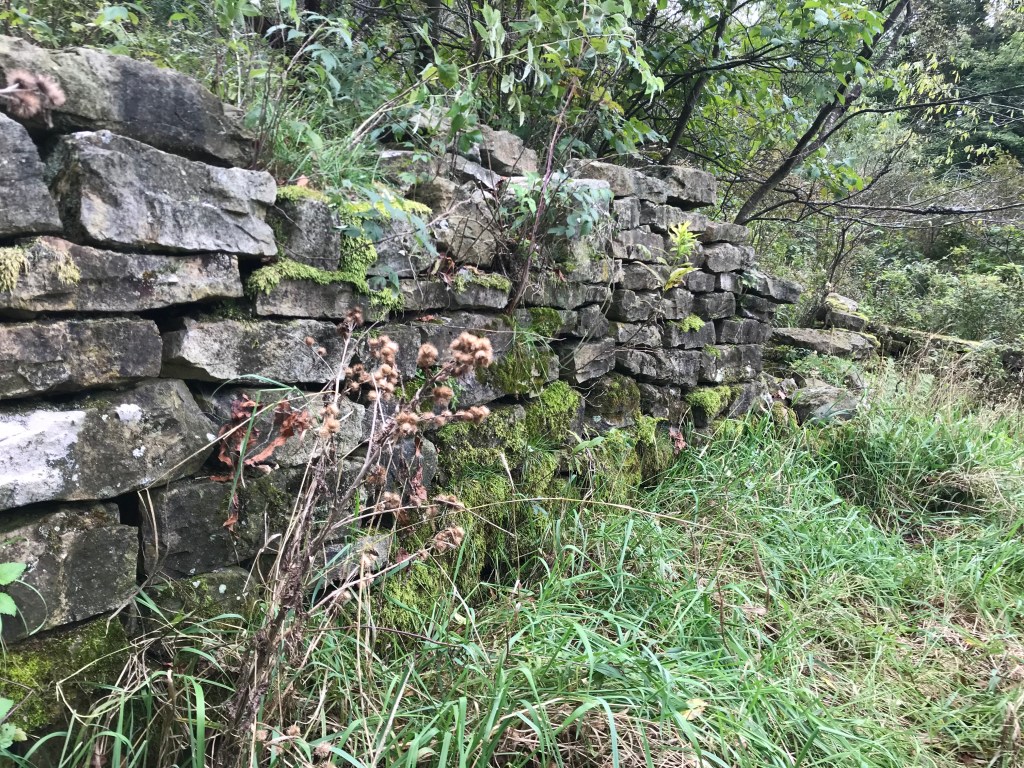
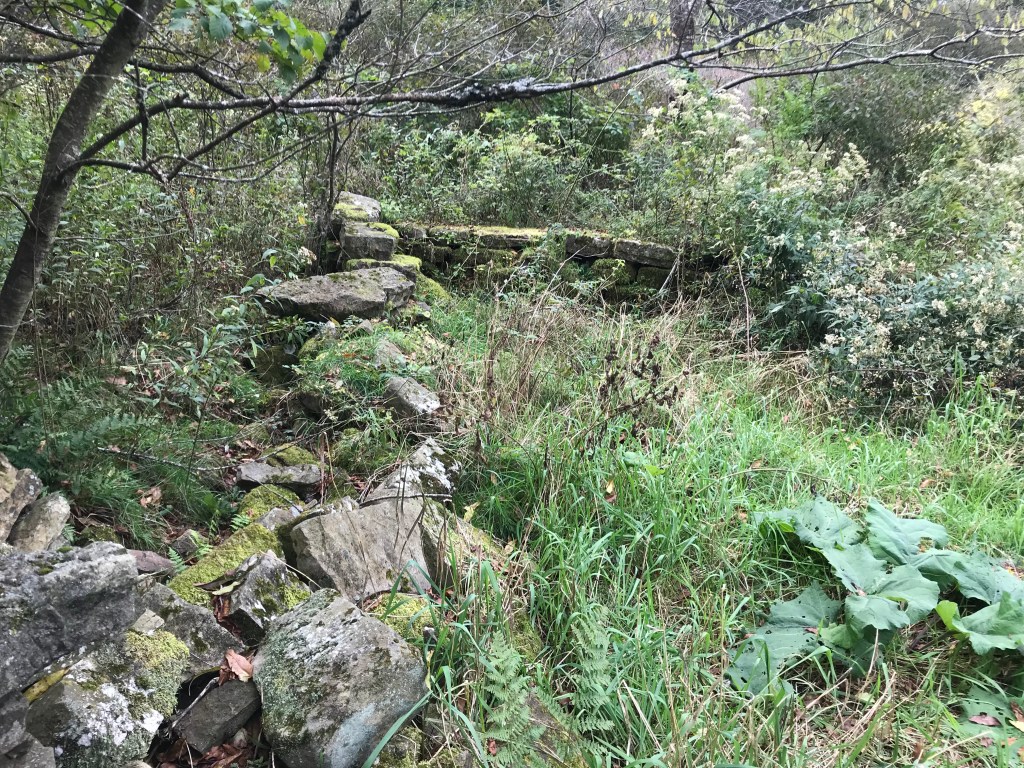
Unless, of course, human activity gives Mother Nature a bit of competition. A planned construction project in the area in the coming year or two will give the landowner an exciting opportunity for a spot of salvage archaeology. I’ve conducted several surveys of the site over the last few months and am excited to see what questions we might be able to answer. For instance, is the unnaturally flat crossing of the nearby creek actually a bridge dating to the building period? Could a dairy have been located close to the creek’s cool waters? How many outbuildings accompanied the barn?
If you are interested in researching a particular homestead, have you looked at the federal and state agricultural censuses taken in Pennsylvania in 1850, 1880, and 1927? They are a wealth of information, detailing livestock types and numbers, crop choices, and building types, along with the usual family data. Find it here.
Sometimes being the Free-Range Historian means lots of time in libraries and archives, which is never time wasted. But I do so enjoy getting off the beaten path every now and then!

 The Free-Range Historian